
Ericsson and Pacific Controls sign ICT smart solutions MoU

Ericsson and Pacific Controls, a Dubai-based ICT enabled software developer and provider of global total automation solutions, today announced a Memorandum of Understanding (MoU) to jointly develop ICT enabled smart solutions for vertical industry sectors. With the combined efforts and experience of both companies, Ericsson and Pacific Controls will enable customers to offer smarter services and products to their end-users.

The agreement calls for Ericsson and Pacific Controls to jointly cater to the business needs of sectors such energy, utilities and certain areas of government. With Ericsson as the global leading provider of telecommunication technology and services and its consulting and systems integration capabilities combined with Pacific Controls’ expertise in the fields of energy management, remote monitoring, controlling and M2M (machine-to-machine) applications, customers will be able to cut their costs, increase their revenues and enhance their overall productivity.

In addition to adding value to customers’ business and introducing initiatives to provide optimum benefits to end-users, the one year agreement is also in line with Ericsson’s 50 billion connected devices by 2020 vision.

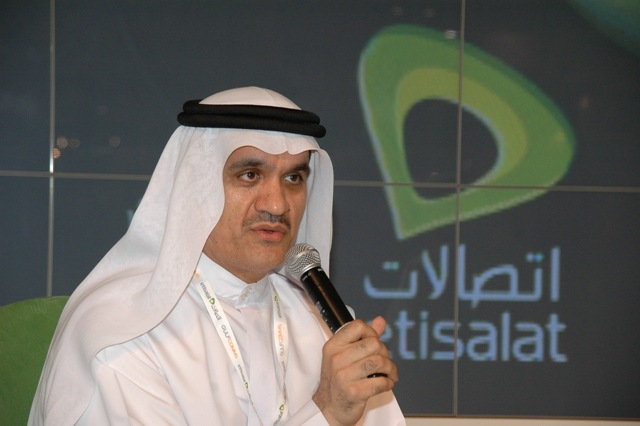
Julfar appointed group CEO of Etisalat

Etisalat has appointed Ahmad Abdulkarim Julfar as group chief executive officer. The appointment comes as part of a new expansion phase that will see Etisalat strengthen its position globally. Julfar joined Etisalat in 1986 and has held several senior roles before being appointed as Etisalat’s chief operating officer in 2006. Julfar 1 web

He had previously served as the general manager for Dubai operations, in addition to various other managerial positions.

Commenting on the appointment, Mohammed Omran, chairman of Etisalat said: “The appointment of Ahmad Abdulkarim Julfar as group CEO will bring further impetus to the realisation of the Etisalat Group strategy as it aims to become one of the world’s leading telecommunications companies.”

Omantel in search of operational and licensing opportunities

Omantel’s CEO Amer Al-Rawas has said the company is seeking operating licences and network building contracts abroad as competition in the sultanate’s mobile telecom sector become stiffer, Reuters has reported. Al-Rawas said that the main driver for the company’s growth and revenue at present is broadband.

Zain Saudi signs up with Alcatel-Lucent for MPLS-based mobile backhaul

Alcatel-Lucent today announced that Zain Saudi Arabia (Zain KSA) has selected Alcatel-Lucent’s IP/MPLS-based mobile backhaul solution to respond to the sharp increase in bandwidth requirements, and to keep pace with subscribers’ demands.

Saudi Arabia is widely recognised as the largest telecommunications market in the Middle East region, with growth in this sector currently estimated at about 30 per cent per annum.

The Alcatel-Lucent solution offers a converged, scalable, multi-access and all-IP network allowing dynamic service creation and delivery at the lowest cost per bit while enabling broadband accessibility to all Zain KSA subscribers, delivering service innovation, streamlining network operations and generating new revenues for the operator. As part of the Alcatel-Lucent’s High Leverage Network architecture, the solution will offer to Zain an increased capacity at lower cost while providing the necessary service reliability and quality of experience that subscribers expect, while it will strengthen the ability of Zain KSA to offer its customers the best possible quality of experience and also prepare its network infrastructure to immediately launch next generation communication and data services.

Huawei looks to Device and Enterprise growth to fuel future business

Huawei today released its financial results for the first half of 2011. Sales revenue grew 11 per cent year-over-year to CNY98.3 billion (US$15.39 billion) and operating profit reached CNY12.4 billion.

Cathy Meng, Huawei’s CFO said that although the global economy continues to face uncertainty, Huawei remains confident in achieving its annual sales target of CNY199 billion with its Device and Enterprise businesses as new growth drivers.

While Huawei has traditionally focused on providing telecom solutions for the operator segment, it is transforming into an integrated ICT solutions vendor to capitalise on the significant growth presented by this market.

In early 2011, Huawei established its Enterprise Business Operation Centre, actively promoting the ICT transformation of the enterprise market. Huawei Enterprise has expanded its businesses into over 100 countries, providing ICT infrastructure construction and information services to multiple industries including government, finance, transportation, power, energy and the Internet. Huawei has launched an upgraded version of its Telepresence product, an HD video conferencing system. In the first half of the year, more than 500 Telepresence systems were shipped, driving the total shipment to over 1,000 units. Huawei also launched a new high-performance access router, delivering comprehensive IP network solutions to its enterprise customers.

Huawei also introduced new cloud computing business models by launching cloud solutions for the visual media (“Media Cloud”) and healthcare (“Health Cloud”) industries. Huawei’s cloud computing and data centre solutions have been deployed in over 20 countries in the world, widely used across different industries such as operators, medical, radio & broadcast, the Internet, education and e-government, among others.

Huawei Device realised strong growth during this period, with shipments up by 40 per cent year-over-year to 72 million units. In the mobile broadband market, Huawei continued to lead the industry, ranking among the top providers globally. The handset business grew by over 100 per cent with smartphones at the centre of the growth and the shipment of Android-based smartphones ranking among the top five in the world.